The Lost Daghdaghan
“A carving lost and the lessons found.”
Time spent in Armenia deepened my fascination, as a woodcarver, with the daghdaghan, a traditional amulet rooted in protection and safeguarding of the home. My Armenian family first introduced me to it at the Wood Art Museum in Yerevan, and later through daghdaghans they brought home from the Vernissage market.
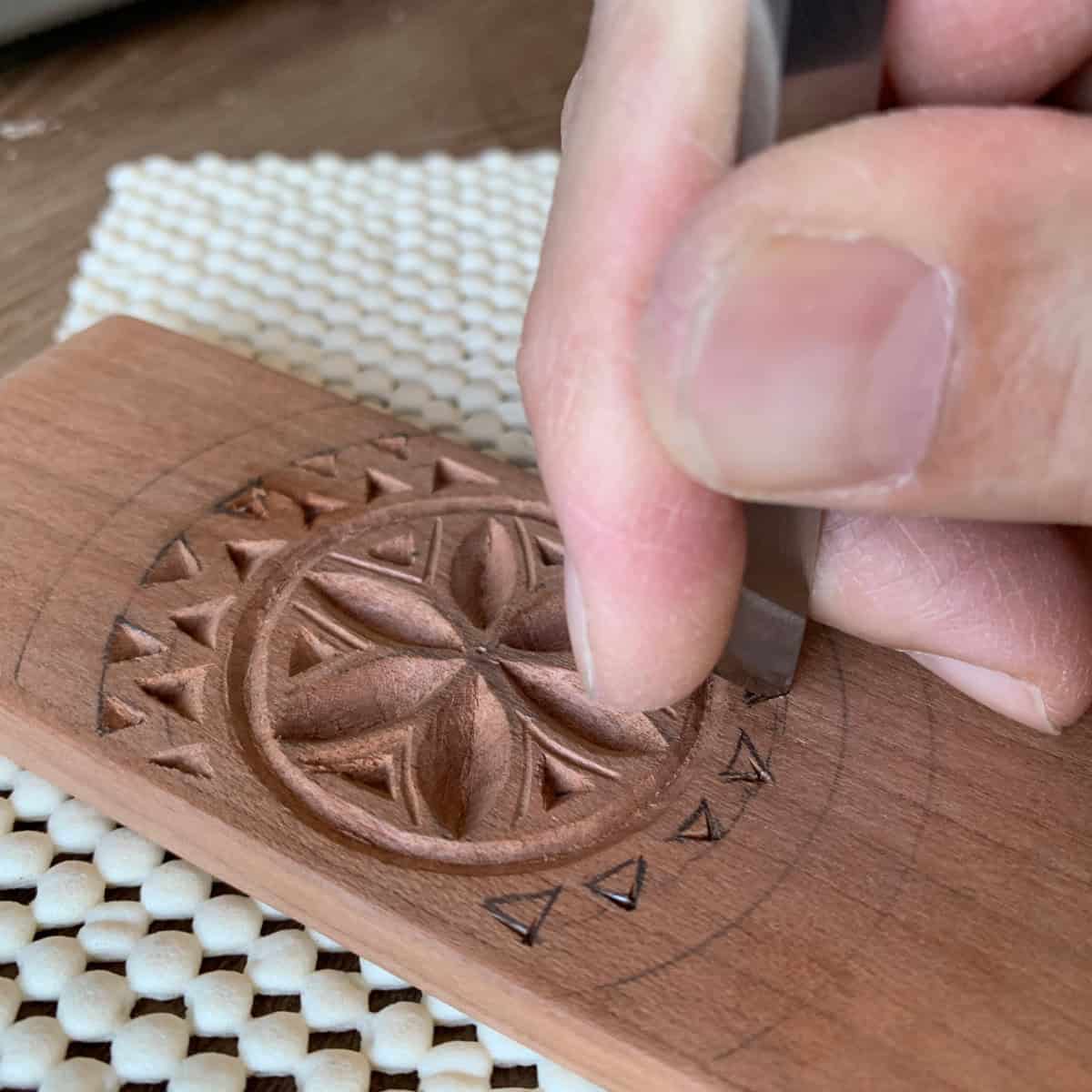
As a passionate woodcarver and artist, I eventually decided that I wanted to learn how to make one myself. I had a leftover piece of cherry wood in my workshop and thought it would make a good practice piece. I was also eager to learn Armenian carving techniques, which differ in subtle but important ways from the styles I already knew.
I tried to find formal instruction—a teacher, a class—but that didn’t work out the way I expected. Instead, I spent time at the Vernissage market, where I befriended many of the woodcarvers. Some of them are recognized as master woodcarvers, a designation that carries real weight in Armenia. Most, however, no longer taught or simply weren’t interested in teaching.
Over the years I spent visiting the market, there was one woodcarver whose work stood out to me again and again. His style and technique always resonated with me and reminded me how high the standard truly was—and how much more I still had to learn. His name is Karen Khachaturyan.

Whenever I made a visit to the Vernissage market, I made a habit of visiting Karen’s table on weekends. I loved walking through the market, seeing what people were making, and talking with local craftspeople. Over time—through many visits and several purchases of his work—I got to know Karen better. Despite the language barrier, he was always open and generous, sharing stories about his life and family. What we shared most deeply was a passion for woodcarving. Karen is a true master.
As he came to know me, he began to share techniques and answer my questions – often times with an impromptu demonstration at his table. He recommended his favorite wood species and even shared some wood with me. I commissioned him to make a special large daghdaghan for me, one with the face of a sun. When I began experimenting with Armenian carving myself, I brought him my work. He critiqued it honestly and showed me how to improve—whether it was tooling, technique, or approach, he always tried to help.
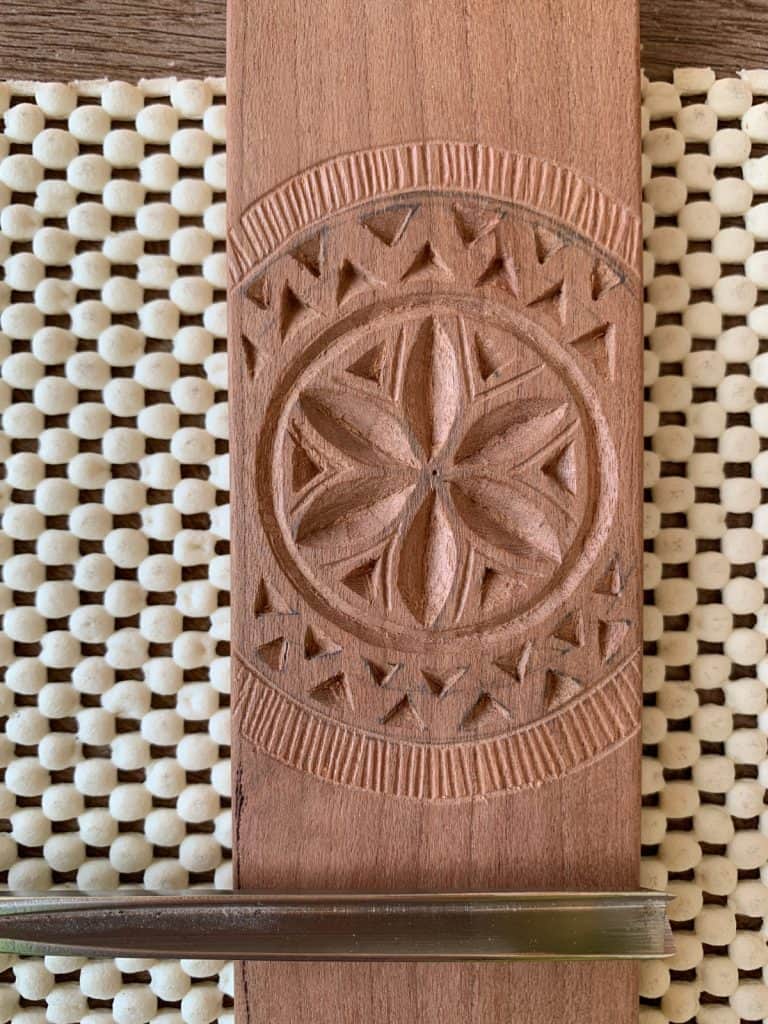
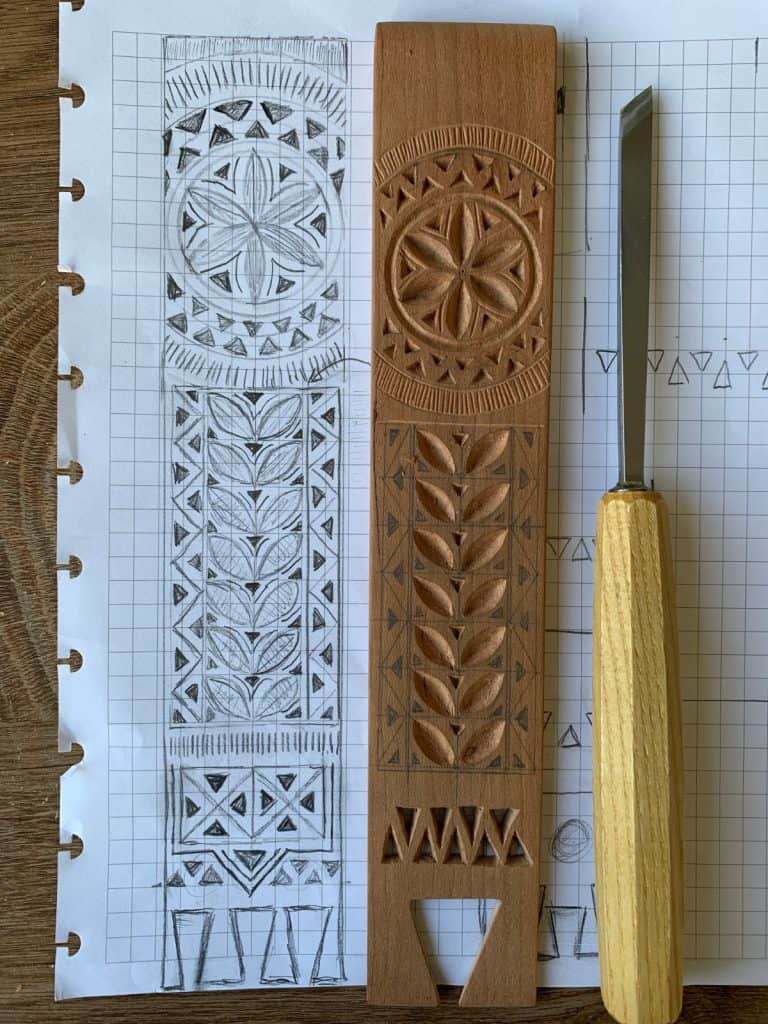
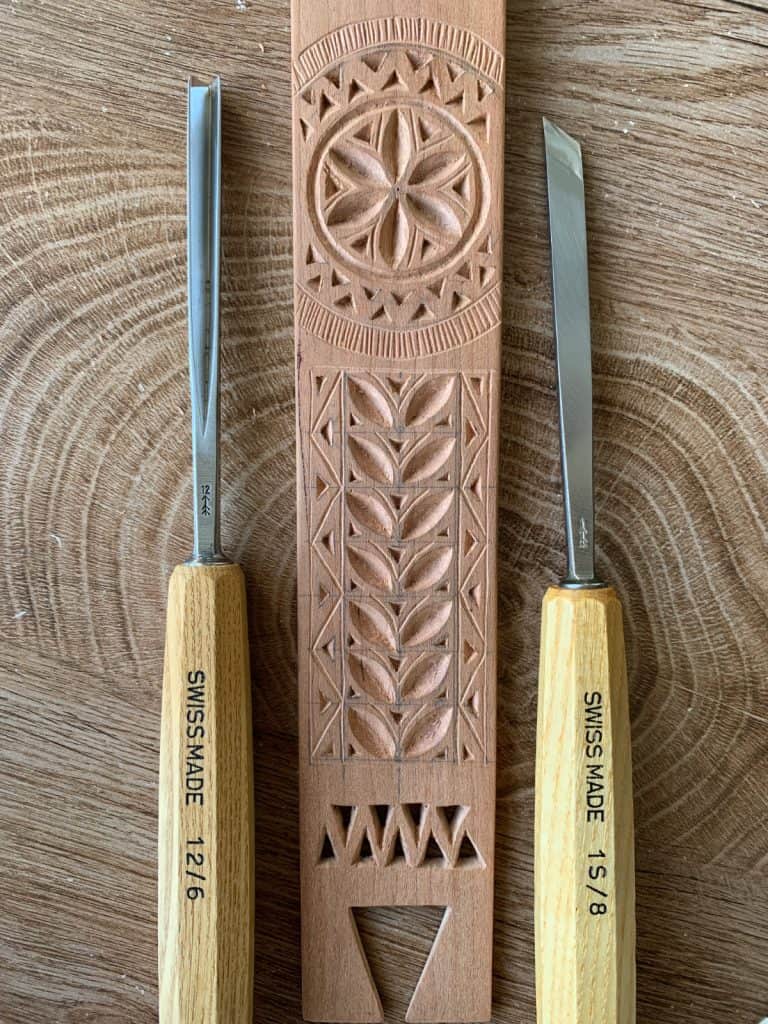
When I finally finished my first daghdaghan, I was excited and proud. It had taken around twenty hours—maybe more—to complete. I rushed to finish the sanding and oiling so I could show it to Karen that weekend. On Saturday morning, I wrapped it in a piece of cloth, slipped it into my small backpack, and headed to the market on foot, just as I did most weekends.
As I walked through the backstreets toward the Cascade, my heart suddenly sank. I realized the daghdaghan was no longer sticking out of my backpack. I must have dropped it.
I immediately turned around and retraced my steps. I told myself this was low risk—I had only passed a few people. After a frantic few minutes, I spotted the piece of cloth lying on the ground. Relief washed over me. But as I got closer, I saw the truth: the cloth was there, but the daghdaghan was gone. Someone had found it, taken it for safekeeping—or for themselves—and left the fabric behind.
I felt crushed. I remember calling my wife and feeling like such an idiot for making such a simple mistake. She tried to reassure me, though it took some time before I felt better. I had worked so hard on that piece, and more than anything, I had been looking forward to showing it to Karen.
Still, I decided to continue on to the market, hoping the walk would help clear my head. When I met Karen, I told him what had happened and showed him photos of the carving so he could see it was real. I felt raw and vulnerable, worried he might think I was careless or foolish.
Instead, Karen surprised me. He listened quietly, clearly affected by the story, and then—like a caring father—he said:
“That’s OK. You will make a better one next time.”
I don’t remember whether he said it in English or Armenian, but the words went straight to my heart. He spent time looking at the photos, offering critique and encouragement, and reminding me that learning is a process.
By the time I got home that afternoon, I was able to laugh about the experience. I no longer felt bad. I realized that this was only a first attempt—not a masterpiece. And, more importantly, I felt in my heart that whoever found it needed it. That first daghdaghan, my first attempt at Armenian-style carving, was now sitting on someone’s mantel, desk or door, quietly doing what it was meant to do.
And that, in the end, felt exactly right.